ROLI LAB
  • Research
  • Publications
  • Team
  • Join
  • Contact
Postdoctoral Fellow and PhD Candidate Positions on the Neural Mechanisms of Spatial Cognition
​
Our lab is launching a new multi-year interdisciplinary project to understand the mechanistic basis of spatial cognition. This pioneering research program will combine brain-wide neural recording in freely moving zebrafish during naturalistic spatial navigation and learning (e.g. Yang et al, Nature, 2024, https://rdcu.be/dSgAY), synapse-level reconstructions of brain-wide cognitive networks in collaboration with the Friedrich Miescher Institute for Biomedical Research, and brain-wide molecular profiling of spatial cells in collaboration with the Max Planck Institute for Biological Intelligence. 

Our lab aims to understand the development, structure, and function of recurrent neural networks that give rise to flexible internal representations of world. 

This project will be supported by the Max Planck Institute for Biological Cybernetics and the European Research Council (ERC Synergy Grant, 2025-2031). We are recruiting for multiple positions (both postdoctoral and PhD) to begin in 2025 and 2026.

Application Requirements
  • Candidates should have substantial research experience and a record of publications in experimental neuroscience (e.g. systems neuroscience, developmental neuroscience, etc.) and computational neuroscience. 
  • Expertise in a programming language (e.g. Julia, Python, MATLAB, or C++) is required
  • The ideal candidate is highly motivated, thoughtful, creative, and collaborative
Application materials
  • CV
  • Cover letter
  • Contact information of three references
Applications are considered on a rolling basis.
​Please send application material to  [email protected] with the subject heading: COGNECTOMICS-APP

Postdoctoral Engineer in Optical Systems for Neuroscience Research
We are recruiting a highly motivated and talented optics engineer to design, build, and implement novel optical devices for brain-wide imaging and neural stimulation in freely moving animals (e.g. larval zebrafish).
Key Responsibilities:
  • Develop advanced optical systems for manipulating neural circuits across the brain.
  • Build and integrate optical microscopy platforms for high-resolution imaging and optogenetic control in vivo.
  • Work closely with a multidisciplinary team of researchers to support complex behavioral experiments.
Application Requirements:
  • Experience in designing and building custom optical systems. Familiarity with Zemax and CAD software.
  • Strong programming skills in C++, Rust, or similar languages. CUDA experience is a plus.
  • Passion for interdisciplinary research in an innovative and collaborative environment.
Application materials
  • CV
  • Cover letter
  • Contact information of three references
Applications are considered on a rolling basis.
​Please send application material to  [email protected] with the subject heading: NEUROENGINEER-APP.

Master's students
Please apply to The Graduate Training Centre of Neuroscience (GTC) at the University of Tübingen. 

Students who are already enrolled in a Master's program and have substantial research experience can apply direct by sending us a CV, a letter describing your scientific interests, and contact information of three references to [email protected] and [email protected]
​
Undergraduates
Our lab encourages applications from talented and dedicated students interested in undergraduate research or Post-Bac research opportunities. Please note that the minimal research commitment is 1 year. Our lab also participates in the CaCTüS program, a Computation and Cognition Tübingen Summer internship program for talented students from around the world.

Picture
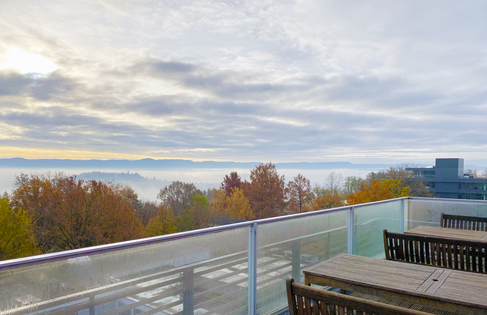
Life in Tuebingen
​
​Tuebingen has a vibrant research community for neuroscience, biology, and artificial intelligence. 
  • Max Planck Institute for Biological Cybernetics
  • Max Planck Institute for Intelligent Systems 
  • Max Planck Institute for Biology 
  • Friedrich Miescher Laboratory of the Max Planck Society
  • Center for Integrative Neuroscience at the University of Tuebingen
  • Tuebingen AI Center ​

​Learn more about Life in Tuebingen.​
​
Our lab is committed to creating a supportive and collaborative environment for scientists from around the world. 
  • Research
  • Publications
  • Team
  • Join
  • Contact